
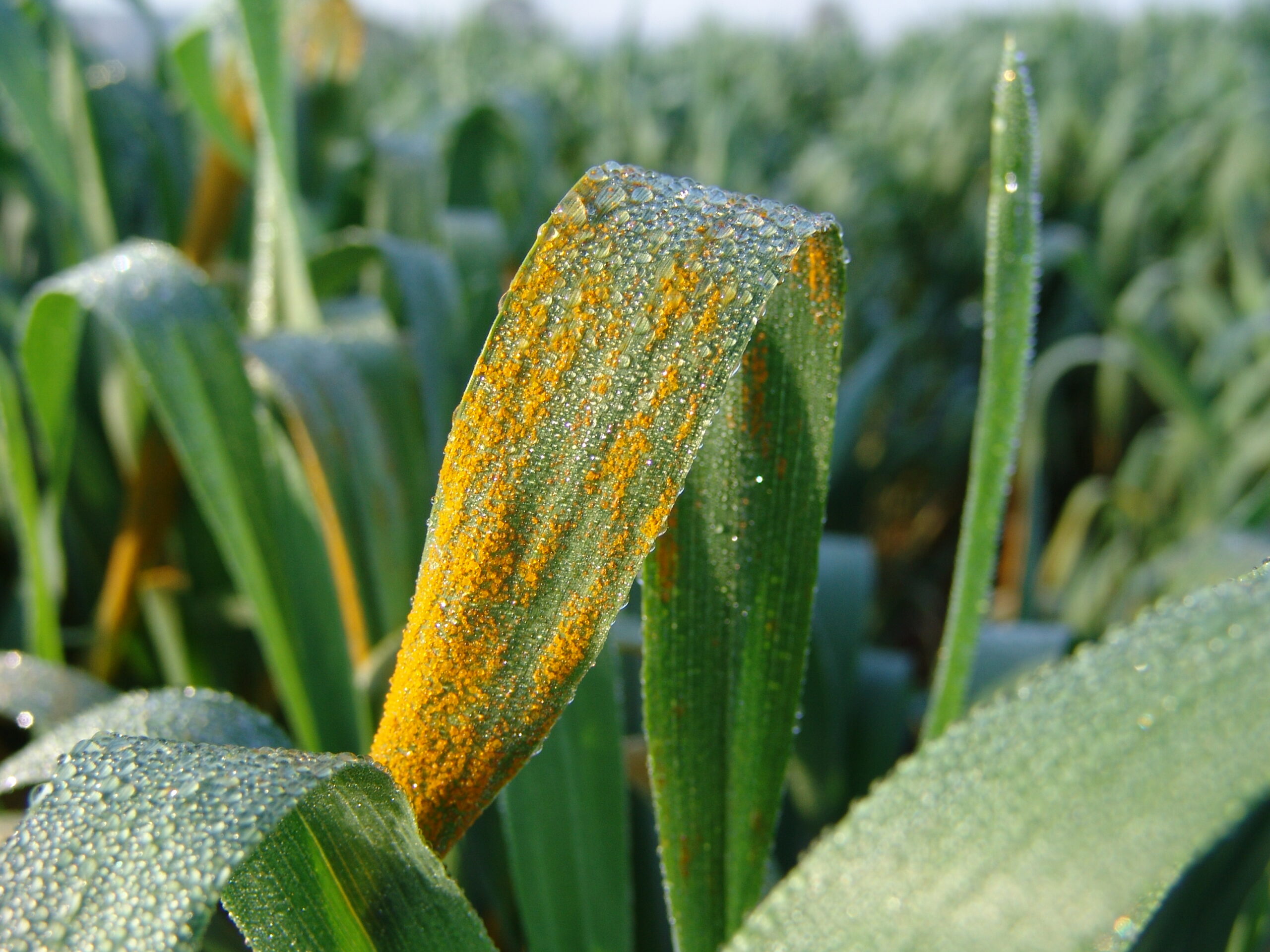
GEELROES
Stripe rust / Yellow rust
Puccinia striiformis f. sp. tritici
Look for yellow-orange rust pustules arranged in distinct longitudinal stripes on the leaves.
2–15 °C · Optimum 15 °C
Cool, wet conditions with dew or mist favour disease.
Practical, science-based crop disease guidance for farmers and agricultural stakeholders, backed by more than 40 years of experience across research, seed, crop protection and field application.
Agricultural experience
Plant Pathology
Local and international experience
Farmer-focused guidance
Rikus Kloppers (PhD) is an applied crop disease specialist whose career has focused on turning scientific knowledge into sound decisions in the field. Over more than four decades, he has worked across agricultural research, seed, crop protection and commercial agriculture, with both local and international responsibilities.
His experience includes work as Researcher at the Agricultural Research Council (ARC) in Potchefstroom, Senior lecturer at the University of the Free State where he also completed his PhD in Plant Pathology, and 27 years in the private sector, including PANNAR SEED and global responsibilities in crop protection and seed treatment.
Robigalia CropCare was established in December 2024 to make that depth of knowledge directly available to farmers and agricultural stakeholders who need clear diagnosis, practical solutions and support in implementation. Based in Stellenbosch, Robigalia provides specialist guidance with a strong understanding of both science and real-world agricultural conditions in summer and winter row crops. Robigalia provides this service countrywide and into the African region on request.
Rikus’s guiding principle is simple: knowledge plus experience creates wisdom. The goal is not to produce a technical report that sits on a shelf.
It is to help clients understand the risk, choose a sensible response and act with confidence.
Not every symptom points to the same cause.
It could be biotic or abiotic.
Robigalia helps identify the most likely cause by considering the crop, visible symptoms, field conditions, crop history and other relevant evidence.
The result is a clearer understanding of what is happening before costly decisions are made.
Crop disease management is more effective when risks are recognised early.
Robigalia assesses potential disease threats and the conditions that may allow them to develop, helping clients take timely action before crop health, yield, quality or profitability is materially affected.
Recommendations must work in the real world.
Robigalia translates specialist plant pathology knowledge into practical, economically sensible actions suited to the crop, farming operation and available resources.
A good recommendation is only valuable when it can be applied effectively.
Robigalia provides guidance as agreed solutions are implemented, helping clients move from diagnosis to action and adjust where necessary.
PLANT PATHOLOGY PRINCIPLE
Three factors are required to cause disease.
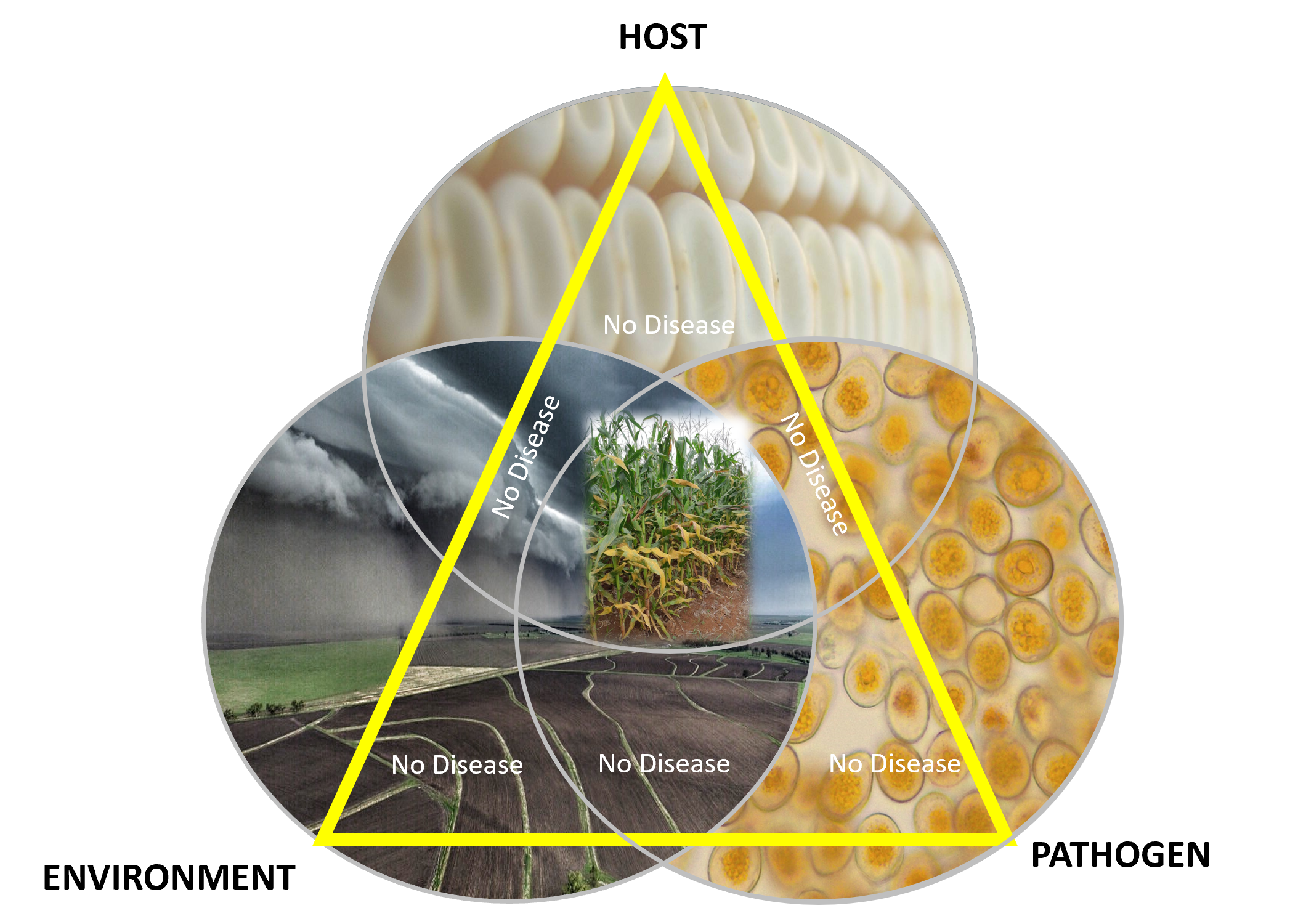
“Nowhere is natural balance better illustrated than by the interaction of plant host, pathogen, and environment.”
— Van der Plank, Disease Resistance in Plants (1968)
Three factors to cause disease:
A. Susceptible host
B. Virulent pathogen
C. Favorable environment
In diagnosis, it is important to consider all factors, not just the disease itself.
Robigalia does more than identify a problem and leave the client with a technical answer.
The work follows a practical three-stage approach that moves from understanding the real risk to choosing the right response and supporting effective field action.
Assess the crop, symptoms, field history and surrounding conditions to identify current or emerging disease risks.
Use scientific evidence and field experience to develop realistic recommendations suited to the crop, operation and available resources.
Support the agreed next steps so the solution can be applied effectively and adjusted as new information becomes available.
Diplodia ear rot, caused by the fungus Stenocarpella maydis (Diplodia maydis), commonly begins at the base of the ear. Look for dead, tight husk leaves, whitish fungal growth between kernels and small black fruiting bodies in infected tissue. Risk increases when dry early-season conditions are followed by wet weather around silking. Management focuses on resistant or tolerant hybrids, crop rotation, residue management and well-drained soils; chemical control is not effective.
Pathology Pic of the Month
Three rust diseases can occur in wheat at this time of year, and they may occur alongside one another. The photographs and field signs below show the differences between stripe/yellow rust, leaf rust and stem rust.
GEELROES
Puccinia striiformis f. sp. tritici
Look for yellow-orange rust pustules arranged in distinct longitudinal stripes on the leaves.
2–15 °C · Optimum 15 °C
Cool, wet conditions with dew or mist favour disease.

BLAARROES
Puccinia triticina
Look for small, scattered orange-brown rust pustules, mainly on the leaves.
10–30 °C · Optimum 20 °C
Moderate to warm temperatures with high humidity, dew or mist favour disease.

STAMROES
Puccinia graminis f. sp. tritici
Look for elongated reddish-brown rust pustules, mainly on stems and leaf sheaths; these later turn black.
15–35 °C · Optimum 30 °C
Warm, humid conditions with prolonged leaf wetness favour disease.
Selected columns by Rikus Kloppers, published by Landbouweekblad and available on Landbou.com.

Published in Landbouweekblad
Rikus Kloppers’s monthly column in Landbouweekblad.
Full articles may require a Landbou.com subscription.
Useful links to professional and industry organisations relevant to plant pathology, seed, crop production and certification in South Africa.
PROFESSIONAL SOCIETIES
Professional societies supporting plant pathology and plant breeding across Southern Africa.

Southern African Society for Plant Pathology
Professional society and resources for plant pathology in Southern Africa.
Visit SASPP ↗
Southern African Plant Breeders’ Association
Professional association for plant breeders in Southern Africa.
Visit SAPBA ↗INDUSTRY RESOURCES
Useful links to organisations supporting seed production and potato certification in South Africa.

South African National Seed Organization
Information and resources for the South African seed industry.
Visit SANSOR ↗
PCS
Information on seed potato certification, certified seed potatoes and the South African Seed Potato Certification Scheme.
Featured article
Die aartappel: ’n Verhaal van sielkunde, siektes en sertifisering Read Rikus’s article ↗ Publication source: CHIPS September/October 2026 ↗
Need clarity on a crop disease problem or potential risk?
Contact Rikus directly to discuss the situation and the most useful next step.
You can use the website enquiry form, email, telephone or WhatsApp.

Your Crop Disease Specialist
Practical crop disease guidance for farmers and agricultural stakeholders. More than 40 years of experience you can trust.
